Cannes Film Festival 2026 Report (Part 1)

Updated: May 23
By luck and the kindness of others, I’ve had the privilege of attending the 79th Cannes Film Festival. The experience has been a blur, which I imagine is the norm. It’s a non-stop marathon of Watching Movies, Making Deals and Getting Fucked Up. I’m sure I could describe it better once it’s over, but given this opportunity, I wanted to offer up my real-time, semi-delirious takes on the new releases I’ve gotten to see here.
On the whole, this year hasn’t been so hot. I’ve heard it referred to as “the three star festival” and “the worst Cannes in over a decade,” and that atmosphere is palpable: new releases from major directors have turned out to be disappointing retreads, great movies have been excluded from competition and AI vultures have been circling, trying to pick the artform clean. I’ve avoided a lot of movies I wasn’t interested in, mainly to spare myself, but I’m also a curious guy, so I’ve occasionally let curiosity (bad movies) kill the cat (me).
Teenage Sex and Death at Camp Miasma
dir. Jane Schoenbrun

Coming off I Saw the TV Glow (2024), I did not expect to enjoy this. I respect TV Glow as a “real movie” in the sense that I think it’s a pure reflection of Schoenbrun’s ideas and intent and not some regurgitated slop, but I didn’t fuck with a lot of what it had going on. I was caught off-guard, then, when I left Camp Miasma thinking that it was both Fun and Good. Schoenbrun has called Miasma “the most commercial movie [they’re] capable of making” which is to its credit: the familiar genre structure gives the movie and the characters just the right amount of artificial forward momentum to support the hit-or-miss jumble of Other Shit that the film and, in all transparency, I as a viewer, are obviously more interested in.
Miasma’s slasher stew consists of frustrating SNL-esque comedy and an exasperating four endings, but also the best cinematic Zoom call this side of Ryusuke Hamaguchi's Evil Does Not Exist (2024), a great monologue from Hannah Einbinder about inescapable and unachievable fetishes and probably the first artificial oner I’ve ever genuinely rocked with (it doesn’t hurt that it’s timed to a pitch-perfect Counting Crows needledrop), which is indicative of the movie’s broader aesthetic achievements. In the post-Lynch cinematic landscape, image-making at large has been in a weird limbo, and while Lynch’s influence is all over TV Glow, some of the ugly/beautiful/aggressive digital images here feel much more in line with the direction Lynch was heading in Twin Peaks: The Return.
I’m not saying Jane is the Heir Apparent or anything, but leave it to a mind like Schoenbrun’s to make the formal innovations of Matthew Vaughn seem worthwhile, especially in a festival that has felt like a museum dedicated to a decaying artform. All things considered, Miasma stands out as fresh and vital.
The Meltdown
dir. Manuela Martelli

While I only have passing familiarity with Chilean actress-turned-director Manuela Martelli’s previous film, Chile ‘76 (2022), I wound up watching The Meltdown due to both its convenient screening time and the simplicity of its premise: in post-Pinochet Chile, a young girl witnesses events surrounding the disappearance of a German skier. I correctly assumed this would be a metaphor for the country’s failure to cope with the consequences of the regime. The film is solidly constructed, anchored by the enigmatic presence of its young lead, Maya O’Rourke. However, The Meltdown lacks the technical quirks or wrinkles that might have elevated it to something more powerful and singular in my mind. Wherever possible Martelli makes “the right choice,” which leads to sharp, simple cutting and compositions, but images that feel too manicured and wanting of personality.
Shallow focus and soft light are a plague in modern cinematography and their presence here only served to make me feel as though I was watching an airbrushed version of this story. In practice, The Meltdown’s greatest strength is the same simplicity that drew me to it in the first place. The most common pair of images in the film are a close-up of O’Rourke and then her POV – often a protracted, roaming slow zoom. The act of watching, placing the audience in the cinematically cherished position of voyeur, elevates the material in every instance, forcing the audience and the film’s young protagonist to navigate the chasm between what we see and what is told to us by the film’s disturbingly complicit adult cast. The best thing I can say about Martelli’s sophomore feature is this: it offers no catharsis, no climax, just the lingering emptiness of the gap never bridged.
Call up Sergei Eisenstein, we got some audiovisual counterpoint out here.
Diary of a Chambermaid
dir. Radu Jude

Speaking of Eisenstein! During the post-screening Q&A for Diary of a Chambermaid (one of my most anticipated movies of the festival), Romanian director and personal GOAT Radu Jude described his meta-adaptation/response to the Mirbeau novel and its cinematic counterpart of the same name as a fundamentally Eisensteinian project, one rendered through the collision of class, culture and cinematic image, the ultimate synthesis of which is one of the best movies I’ve seen all year. The film follows Gianina (Ana Dumitrascu), a Romanian nanny, who works for a well-off, liberal French family and longs to visit her daughter. Meanwhile, Gianina is performing in a local stage adaptation of Diary of a Chambermaid, which her employers have encouraged her to star in. Hijinks and tragedy ensue.
Another entry in Jude’s recent run of austere, hyper-digital satires, Radu navigates Gianina’s distance from her daughter through shared FaceTimes and iPhone videos, with smartphone footage accounting for probably 40% of the movie’s overall runtime. The script is sharp as ever, with some particularly excellent moments involving explicit footage of the war in Ukraine screened on an iPad and a cruel gag involving a poorly timed Instagram post. I honestly don’t have too much I feel like is worth saying other than “Go watch it!” and “We’re so fucked.”
All of a Sudden
dir. Ryusuke Hamaguchi

192 minutes is a hell of a runtime, especially at 8 am, which is when I watched this movie. Such a size carries an expectation of scale, not necessarily in material or bombast, but in the exercise of tedium or depth; the runtime will justify itself. All of a Sudden, then, left me at an occasional loss. There’s no doubt about the film's quality, and Hamaguchi’s knack for formal fundamentals makes it stand out in what is, again, a pretty shitty festival year. My problem is that I felt like I was being force fed a bottle of syrup. The movie’s subjects are ripe for sappy, humanist melodrama: a noble but beleaguered care home administrator, a theater director with terminal cancer, a cynical nurse, an aging actor and his autistic grandson.
There’s no shortage of pain and, to the movie’s credit, All of a Sudden acknowledges the systemic difficulties surrounding the issues it confronts (including a 20-minute explanation of how capitalism is killing us all – which is true). However, the solutions are too convenient, too optimistic, too all-encompassing. It might be humanist, but the lack of complexity in the extensive conclusion feels distinctly inhuman.
Yes, I cried a little, and it feels weird to criticize a film that could elicit a reaction like that, but like I said: 192 minutes. A few beautiful scenes don’t make a great movie. It’s Good though. Chance seal of approval, whatever that’s worth.
Paper Tiger
dir. James Gray

In 2007, James Gray released We Own the Night, a crime drama about two brothers at odds in New York during the late ‘80s as the Russian mafia rises to power. In 2022, James Gray released Armageddon Time, a family drama about a Jewish family in New York during the late ‘80s as they navigate personal tragedy and their young son comes of age. And now, in 2026, James Gray has released Paper Tiger, a crime/family drama about a Jewish family (with two brothers at odds) in New York during the late ‘80s as they navigate personal tragedy and the rise of the Russian mafia.
My point being that Paper Tiger is hardly anything shocking or original from Gray, but it’s his Thing, and he’s one of the underappreciated masters of modern cinema. In fact, Gray more or less recreates the shootout climax of We Own the Night to incredible effect. The movie is well executed on every level and Adam Driver fits nicely in a supporting role that embraces the inherent absurdity of his six-foot-plus, deep-voiced, bigfoot-esque presence in a way I’ve never really seen before. Nothing else to say, but all three movies mentioned above are amazing and this one just happens to be the newest of them.
Sheep in the Box
dir. Hirokazu Kore-eda
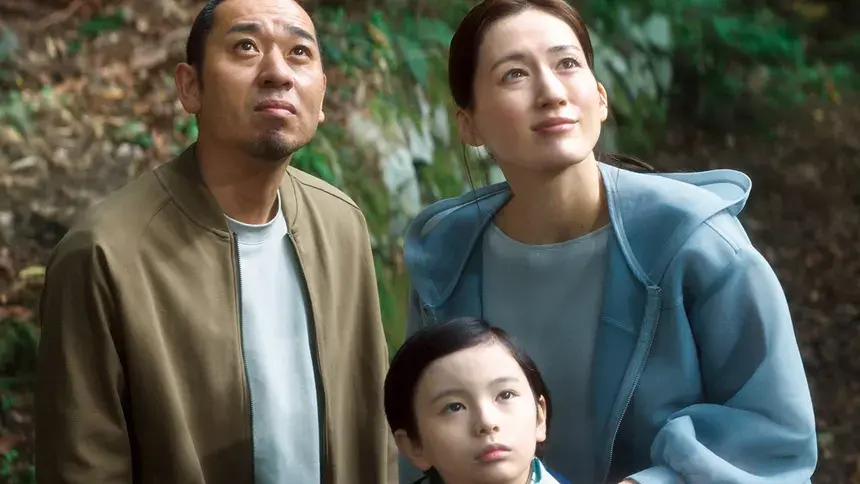
The last few years have been rough for Kore-eda, who has been turning in career-worst work, and Sheep in the Box is probably his nadir. Just crap. And somehow, it isn’t the worst movie I’ve seen in competition this year. The movie starts as a slight, but competent revamping of the plot of Steven Spielberg’s A.I. (2001), seemingly updated for our modern understanding of artificial intelligence – except, by the midpoint, it isn’t that at all. It’s Some Other Thing, chock-full of obvious metaphors, nonsensical plot developments and stilted “human” moments that beg you to cry. I have no more patience left in me for this movie. More like Sleep in the Box.
Double Freedom
dir. Lisandro Alonso

In his introduction, Argentine director Lisandro Alonso described Double Freedom as a sequel/remake/reboot to his debut feature La Libertad (2001), leaving most of the already unprepared audience audibly baffled. Walkouts followed, along with whispers of “Is he fucking with us?” and “What the fuck is this?” and even “I fucking hate Cannes.”
To answer the first question, no, I don’t think he was fucking with anybody. In fact, Double Freedom is a straightforward, sincere tribute to his friend – the film’s lead, Misael Saavedra. Misael starts out doing what he did last time: chopping down trees, eating, listening to the radio. For the first 15 minutes, every shot is identical to the original film, only Misael is 25 years older, and when differences do finally emerge, they begin gradually, snowballing into something entirely new and surprising. Double Freedom is more or less the platonic Alonso movie, simple and beautiful, far more stripped back than his recent work with Viggo Mortensen, but I also can’t imagine watching it removed from its predecessor. I don’t think even that context would have turned the walkouts into Slow Cinema Enjoyers; the audience that remained by the time it was over was the most enthusiastic I’ve seen all festival. It was very sweet and the movie is very good. Lisandro is a lion.
The Beloved
dir. Rodrigo Sorogoyen

What I had expected going to Cannes was mostly experiences like this: a movie that was not on my radar, a filmmaker with whom I have only a passing familiarity, and an unexpectedly exciting experience. On the surface, The Beloved almost sounds like a retread of Joachim Trier’s Sentimental Value (asshole director dad, estranged actress daughter, blah blah blah), but in practice, it’s much more rambling and bizarre (positive). The arc of the relationship is relatively paint-by-numbers, but the aimlessness with which it gropes around at inconclusive interactions and unexplainable emotions makes it mercurial enough to feel like something more than a formally absurd take on trite “movies-about-movies” material.
And golly gee, is it formally absurd. Sorogoyen and DP Alejandro de Pablo deploy every camera and format under the sun (including but not limited to: REDs, Arris, Super 8, Super 16, 35mm, DSLR and mini DV), as well as various digital and practical black and white looks. The sound design is similar: isolating lavs, transitioning bafflingly between diegetic and non-diegetic music, mismatching scene audio, et cetera. The formal chaos is just that: chaos, part of the characters’ corrupted perceptions of reality, applying in real time the poisonous narratives they apply to their own lives, as dictated by their unhealthy dedication to cinema (which, as we all know, is evil). Not quite my favorite movie I’ve seen, but a really great one.
I’ve seen and will see more movies, so there’s more to come. Everybody say, “Thank you, Thierry!”
-Chance


Comments