In Between the Negatives: Ranjan Singh on Producing from a Preservation Lens

Updated: Jul 2
The process of film preservation begins long before a film reaches an archive. It starts on set, in the decisions that go unrecorded – in a cinematographer’s choice of one stock over another, the constraints that shaped a scene, what was said between collaborators and never written down. ‘In Between the Negatives’ is part of a larger research collaboration across India, Taiwan and Brazil called the Arkebara Collective that is working toward a preservation manifesto. It is rooted in Majority-World filmmaking realities rather than borrowing from institutions that were never built for us. Along with the case study of Tiger’s Pond (2025), an independent feature film shot on 16mm film, are interviews with contemporary practitioners – cinematographers, producers, colorists – working in Indian independent cinema. Among these are women whose processes have gone undocumented twice over: once on set, and once in the historical record. This series is itself an attempt at preservation.

Ranjan Singh is a film producer and distributor with over two decades of experience in Indian cinema. He has worked across exhibition, distribution and production, starting with multiplex exhibition from 2002 to 2007, then as part of Phantom Studios, and subsequently as an independent producer and distributor. Beyond producing, he is a vocal champion of young independent filmmakers, a devoted collector of film posters and memorabilia and a firm believer in celluloid as a medium worth fighting for.
The film Tiger's Pond is set in the sleepy hamlet of Vaghachipani, where an underaged shepherdess is discovered to be pregnant. Her employer, a man hell-bent on becoming the chairman of the village council, is making every effort to cover it up, resulting in more lies threatening to be exposed. The young shepherdess has no idea what a pregnancy is.
Tiger’s Pond was entirely shot on location in a remote village in Karnataka, also director Natesh Hegde’s hometown. Pedro (2021), the first part of Hegde’s spiritual trilogy, was also shot in the same village.
The following interview was conducted with Ranjan, who served as a producer on the film.
Joining 'Tiger's Pond' Mid-Journey – What a Producer Finds When They Arrive Late
Ranjan joined Tiger's Pond after the shoot had already been completed, a situation that is not uncommon in independent Indian cinema where financing is often assembled in stages. His first concern on joining was the budget – understanding what had been spent, what remained, and what it would take to finish the film. It was in this initial accounting that he learned the film had been shot on 16mm.
The cost of shooting on film was, he estimates, roughly double what it would have been on digital.
"If you look at only the shooting expenses, it might be the same. But the number of takes, the number of days, the logistics between the lab and the location – all of those permutation combinations add up."
Despite joining after the shoot, Ranjan saw the offline cut, liked the film and committed, a decision he describes as both emotional and practical. The film had already been selected for Berlinale; the immediate priority was to finish it and get it there.
The Cost of Film vs Digital – A Producer's Full Accounting
Ranjan's perspective on the economics of shooting on film is more complex than a simple comparison of day rates and equipment rental:
Takes and stock consumption:
Non-professional actors, of whom Tiger's Pond has many (including real villagers cast from the location), cannot reliably replicate performances across multiple takes. Every additional take burns stock. This is a cost that compounds across a shoot.
Logistics:
For a film shot in the remote interiors of Karnataka, transporting cans to the nearest processing lab and back is a significant recurring expense. Ranjan recalls that for Lootera (2013), shot in a similarly remote location in Bengal, there were effectively three people dedicated to the physical movement of footage.

Post-production storage:
This is where Ranjan observes that labs in India no longer really offer long-term storage of developed negatives. Producers are expected to take their material and maintain it themselves. For digital, this means hard drives that must be copied, upgraded, and maintained every two to three years – indefinitely. In a humid city like Mumbai, drive corruption is a real and recurring risk. There is, to his knowledge, no central facility in Mumbai where a producer can deposit digital material and have it professionally maintained over time.
"On digital, you need to keep upgrading every two or three years. Your drives have to be changed, copied, reserved. And God forbid, especially in a city like Bombay – it's humid as hell – all of your drives get corrupt."
He contrasts this with his memory of a government print facility in Mahim, Mumbai, where producers could deposit original film negatives at a temperature-controlled facility for an annual fee, around ₹20,000–24,000 at the time; and the negative would be maintained, labelled, and stored indefinitely. He is not aware of an equivalent facility for digital material in India today.
The difficulty of documentation doesn't seem to belong to one kind of filmmaking context or another. Everywhere, there are people struggling to keep things together, and what remains depends a lot on what systems happen to exist around them.
Preservation Philosophy – Film vs Digital
Despite acknowledging that film doubles the production cost, Ranjan makes an unequivocal statement: for preservation, film is still the superior medium.
His reasoning is practical and grounded in the Indian production landscape:
"Post-digital – if I'm talking about our landscape, where we all operate in India – there are a lot of smaller production companies. Producers who might make five or six, seven films in their entire career. Production offices which make smaller films and our budgets are limited."
For these producers, the ongoing maintenance burden of digital preservation is effectively unmanageable without a dedicated team or central facility. Film, by contrast, requires only temperature-controlled storage – a passive and relatively simple intervention. While this argument may be contested, it still holds weight in the Indian context.

He also raises the problem of versioning. A single Indian film today may exist in seven or eight versions – theatrical cut, satellite version, streaming version, airline version, through ancillary rights, and more. Each version involves edits. Maintaining the integrity of the original cut across all of these versions, on digital, requires active and ongoing management that most small production houses cannot sustain.
The Unnamed Lost Cut – A Case Study in Digital Fragility
"I know of a couple of films – and these are super hit films, and I know because I was a part of them. The original cut, which was agreed between the editor and the director – that cut is not there."
Ranjan recounts, without naming names, an experience involving a significant production house and a major studio, where the original editor-approved cut of a successful film was effectively lost within a year of release – not through disaster or negligence but simply through the accumulation of versions, the movement of drives between parties, and the absence of any system for tracking the original. The film had been shot on digital.
He draws a pointed contrast: physical film negatives, he argues, survive precisely because they are large, tangible objects that require deliberate effort to handle. Their physicality is their preservation advantage. A hard drive, because it is small and easy to copy and move, paradoxically becomes easier to lose.
The anecdote of the lost original cut is worth dwelling on as a case study. The film in question was shot digitally by a major production house. After theatrical release, it went to OTT with some cuts. Then to satellite with further cuts. Then to aeroplanes and ancillary rights with additional edits. Somewhere in this chain – between labs, post-production facilities, and the production office – the original, locked, editor-approved cut disappeared. Not destroyed. Simply unlocated.
Ranjan notes this was not an obscure or poorly-managed production. It was a prolific, well-resourced studio. The implication is clear: if this can happen at the top of the industry, it is happening routinely further down.
Behind-The-Scenes capture as Preservation – Ranjan's Core Belief
Ranjan is a passionate advocate for behind-the-scenes (BTS) documentation and considers it as important as, or more important than, the preservation of the final film itself.
"The whole process of BTS to me is far more important than the finished film."
His logic: most Indian filmmakers work in conditions that are not financially rewarding. They make films because they love the medium. The BTS is where that love, effort, and process is visible – on set, in real time, before retrospective interviews introduce the benefit of hindsight.
He draws a distinction between on-set BTS documentation and post-release interviews. Post-release interviews, he argues, carry a degree of what he calls "thoughtful intelligence": they are shaped by how the film was received, how the filmmaker wants to be perceived, what makes a good story in retrospect. BTS footage, by contrast, captures decisions as they are being made: unfiltered, unpolished, and therefore more historically valuable.
"When you're on a set and you are covering it, you see how decisions are being made in real time. Things which could be, you know, as real as what is happening. But when you're going to talk about it six months later, sitting in a studio – it's different."
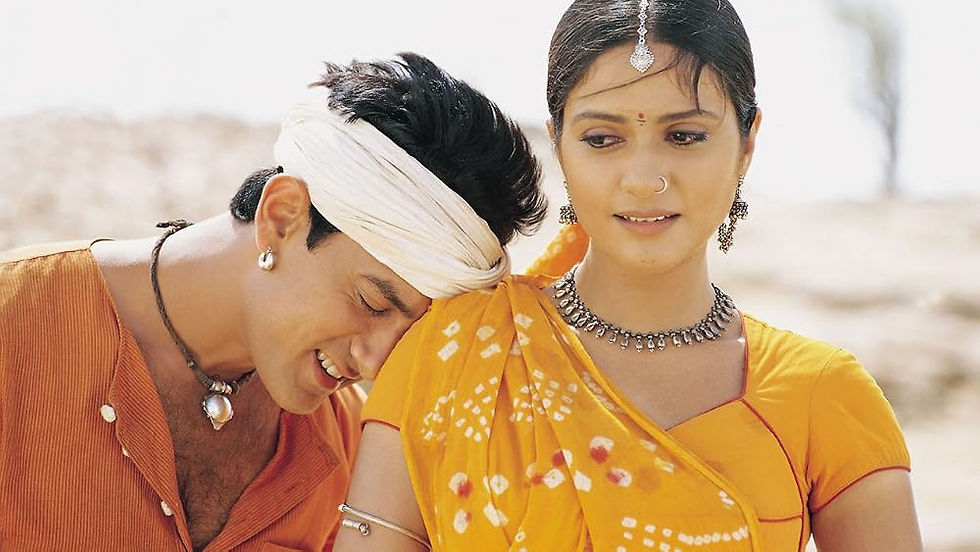
He cites Lagaan (2001) as a formative example. He read extensively about how Lagaan was made – its use of walkie-talkies for the first time on an Indian production, its five-o'clock discipline, its village logistics, and considers that documentation one of the most valuable learning resources he has encountered as a producer. He visited the shoot as a college student, travelling long distances by bus to Kutch just to watch. Years later, when working on a film with Ashutosh Gowariker, he was able to draw on that knowledge directly.
"At least in India, 80 % of filmmakers are non-film school. So they learn through this only."
He has allocated BTS budgets on his own productions from the very beginning – on Lootera for over 100 days, on Bombay Velvet (2015) for over 200 days. For Bombay Velvet, the first crew member he dispatched to location was a BTS camera operator, before any other element of the production was in place. He has time-lapse footage of the entire set construction – from 40 acres of grass to a complete film city – and considers it some of the most important material from that production.
Ranjan talks about the Bombay Velvet production design materials – every set drawing, every floor plan from production designer Sonal Sawant and her team – were compiled into a book. He notes, with some regret, that he does not know where that book is today. Phantom Studios was sold to Reliance, then changed hands again. The materials went with the company.
The Phantom Films Problem – Institutional Memory Lost in Corporate Transition
The fate of the Bombay Velvet production book is emblematic of a broader problem Ranjan identifies: institutional memory is vulnerable to corporate change. When Phantom Films, one of the most significant production companies of the 2010s in Indian independent cinema, was sold, the physical and documentary archive accumulated across its productions went with it, into uncertain ownership. Ranjan does not know where those materials are today.
This is a preservation problem that has nothing to do with format, technology, or budget – it is a structural problem of how Indian production companies hold and transfer knowledge, and that may be one of many reasons why there is a need for institutional support by the state.
On 'Jugnuma' – A Preservation-Conscious Production

For Jugnuma (2024), a film Ranjan is distributing, he is taking a more deliberate approach to preservation. The original negative is being retained by the producer in Bangalore, and Ranjan intends to make an additional copy for deposit at the National Film Archive of India (NFAI). This represents a level of preservation intention that he acknowledges is not standard practice, particularly for smaller productions.
Why Indian Independent Producers Don't Preserve – A Structural Analysis
Ranjan offers a layered and candid analysis of why preservation is so consistently deprioritized in Indian independent cinema:
Information gap:
Most producers simply don't know what preservation requires or why it matters. Ranjan himself did not understand the importance of archives until he went to study film appreciation at the renowned Film and Television Institute of India (FTII) as an adult, where his proximity to NFAI, across the road, and conversations with then-head of NFAI Prakash Magdum (currently Managing Director of National Film Development Corporation [NFDC]) changed his perspective entirely. Earlier, while watching decades worth of films from the state-owned broadcaster Doordarshan in an underground storage facility of NFDC, he had encountered LTO (linear tape-open), a magnetic tape storage, for the first time. These were formative experiences that most producers never have.
Budget structure:
Around 70 % of Indian films are made on limited budgets. Preservation is not a line item in most production budgets. Ranjan draws an analogy to insurance: 15 to 20 years ago there were no insurances for film but that has changed over time because of enough conversations around this topic and he notes that even the films made on limited budgets make sure to insure to some degree. Another example is: actor entourages and social media managers, that were not budget items either. They didn't exist as professional categories. Now they are standard. He believes preservation can follow the same trajectory – once producers understand its importance and the knowledge is sufficiently widespread, it will become a standard budget line.
Societal attitudes toward art:
Ranjan identifies a deeper cultural issue: in India, art is not treated as having historical or economic value the way that it is in wealthier countries. Films are primarily understood as entertainment. The idea that a film is a cultural artefact with long-term value – that it will still be watched, studied, and monetized decades later, is not embedded in producer culture.
Absence of institutional infrastructure:
Unlike countries with well-funded national archives and institutions like the British Film Institute (BFI), India's preservation infrastructure is underfunded and limited in reach. NFAI exists but cannot serve the volume of production the country generates. There is no central digital preservation facility equivalent to the old film negative storage in Mahim, Mumbai. The government has historically provided some support through NFDC and NFAI but that support has diminished.
Informal Documentation as Valid Preservation
When the Indian Women Cinematographer Collective (IWCC)'s WhatsApp group’s example was raised, where women cinematographers share technical knowledge informally, as a model of non-institutional documentation, Ranjan validates it immediately. He argues that once knowledge is shared and discussed, it begins to circulate and eventually finds its way into practice.
He also notes that his own knowledge of distribution – the instincts he has developed about release windows, audience demographics, programming cycles, is not formally documented anywhere. It exists in him, accumulated through 25 years of experience across exhibition, distribution, and production. From 2002 to 2007, he was a part of opening the first PVRs and INOXs around the country and naturally experienced the course of cultural changes. He learned by doing – opening multiplexes in Baroda, Goa, Indore, Nariman Point, Mulund, Goregaon, Latur, Darjeeling, Jaipur, Bangalore, Calcutta; working with programmers from various cities and then using that information to make a unique call about the film you want to get released. That knowledge is oral and embodied, not written.
The established language of archiving doesn't have a very good vocabulary for this – neither at the survival stage or the production stage. This seems to be the reality for much of the world. It's less a deviation from some norm than the norm itself.
Creative and Format Decisions – The Producer's Role
Ranjan describes his involvement in format decisions as collaborative rather than directive. The choice of film versus digital is primarily a director-DP decision, but he likes to be involved, not primarily for cost reasons but because he is genuinely interested in how format serves the story.
"I personally would love to shoot on film all the time, but you also need a director and DP like that. It can't be a one-man fancy of just the director. If you don't have the budget, then you can't go ahead and do it."
He sees his role as a facilitator, making happen what the creative team has decided, within the constraints of what the budget can sustain. He notes that for smaller budget films, shooting on film can actually be more feasible in terms of discipline: a tight shooting ratio forces efficiency, and if the film can wrap in 25 to 26 days, the cost differential may be manageable.
He also acknowledges that he has shot on film before the advent of digital filmmaking in India, and that the logistical realities of those experiences inform his understanding of what Tiger's Pond's production team went through.
Ranjan Singh's Personal Archive – 10,000 Posters, Film Costumes and Memorabilia

In a detail that speaks directly to Ranjan's character as a preservationist, he mentions that he has personally collected over 10,000 film posters, has personally preserved costumes from the films he’s worked on, apart from the small memorabilia like clap boards.
The posters are distributed between his home, his office, and a storage unit. The oldest is an original poster for Aar Paar (1954) – now over 70 years old. He has been trying to find a way to properly preserve them for years. He acknowledges the difficulty of preserving paper in Mumbai's humidity but has not given up on the collection.
The detail is not incidental to this research. A producer who personally collects and attempts to preserve 70-year-old film posters has a fundamentally different relationship to film heritage than the industry average. His advocacy for preservation is habitual and comes completely out of his love for his work in cinema.
Notes for a Future Preservationist
When asked what he would say to a preservationist working on one of his films fifty years from now, Ranjan's answer is immediate and unexpected:
"Please also have the same respect for the BTS. Because all the fun and all the effort is there. What you see on the final film is after a lot of blood, sweat, and a lot of DI, a lot of post-production. But the details, in the BTS, is where the real stuff is."
He asks that a future preservationist watch the BTS material before working on the film, and find an emotional connection to the process before engaging with the restoration. For Ranjan, the making of a film is inseparable from the film itself, and a preservation that treats only the final cut as the object worth saving is, in his view, an incomplete preservation.
"We do it because we all love it so much. Which is why the whole process and the fun and the love and all the crazy things – everything that you had while on the process, should be preserved and more."
Preservation as a budget line item – the way insurance once was – is not a radical ask. It is simply the next thing that becomes standard once enough people understand why it matters. That understanding, this series argues, begins on set, long before a film reaches an archive.
The Arkebara Collective is a group of audiovisual heritage archivists and film practitioners with a strong aim of strengthening resilience in Majority World film and media preservation. For more information about this ongoing project, visit the Arkebara Collective’s official page.
-Janhavi


Comments