‘Euphoria’ Season 3 is a Guilty-Pleasure Genre Switch-Up

The following review contains major spoilers for Euphoria.
“This show used to be about high schoolers!”
This was the delirious sentiment my friends and I shared as we gathered around the TV over the past couple months to watch a once-coherent HBO drama crumble into a shadow of its former self. Season one was a dark coming-of-age saga that seemingly ushered in a new class of prestige television. It was both tantalizing to the senses and confrontational in its depictions of drug use, abusive relationships and queer dynamics, delivering on Skins-like tragicomedy for a new generation.

By the time we got to season two, it felt like a show not just about teens but for teens. Even if fan-favorite characters like Jules (Hunter Schafer) and Kat (Barbie Ferreira) were sidelined in favor of high melodrama that didn’t always tie up its loose ends, it still retained a sense of maximalist flair and the show’s core identity. Fast-forward over four years later – a wait time no TV fan should ever have to endure – and that core identity has been completely thrown out the window.
Euphoria has now become your stereotypical crime drama. It’s a neo-western wherein the once-formidable Nate Jacobs (Jacob Elordi) dies in a coffin from a rattlesnake bite and the finale sees Ali (Colman Domingo) – a small supporting character and moral compass – shooting Marshawn Lynch in the groin before exacting revenge on a cowboy pimp named Alamo Brown (Adewale Akinnuoye-Agbaje). It’s ridiculous, obviously, and in continuity with Sam Levinson’s universally panned 2023 creative detour, The Idol, it’s an example of him succumbing to utter self-indulgence.
Much of the season revolves around an escalating turf war between rival drug lords spouting violence and campy one-liners. The plotline involving Cassie’s quest toward OnlyFans stardom comes off as little more than an excuse to center Sydney Sweeney as the scantily clad protagonist in a series of sexually-explicit vignettes. At this point, we’re all victims to Levinson’s poor taste and inclinations, and while he yadda-yaddas himself halfway toward some deeper themes on faith and the American Dream, the end result is remarkably shallow.
And yet, I found myself strangely compelled week to week. Somewhere between the floral extravagance of Cassie and Nate’s wedding and Rue’s (Zendaya) tightrope-walk between two kingpins and the DEA in Episodes 3 and 4 respectively, it clicked. The character writing is paper-thin, the “big moments” are predicated on nothing except shock value and a palpable yearning to be hashtagged, but there I was yelling and wincing and laughing at the TV every Sunday. And so were my friends. And my dad, apparently.
I found a sense of community routinely bolstered by this mesmerizing show that I no longer even consider “good”. My favorite TV of the year thus far has been season four of Industry, but I’m still on the hunt for a local community who I can discuss it with. Euphoria? The Ithaca College dining halls were habitually ablaze with speculation as to how many fingers or toes Nate would have by the season’s end. Spanish pop superstar Rosalía plays a stripper named Magick with a bejewelled neck brace... was there a hidden camera in that thing? Was she, too, in cahoots with law enforcement?

Social media discourse was rife with theories and visual analysis, and it sent me hurdling back to the days of Lexi’s (Maude Apatow) play or the season two New Year’s Eve party. It’s a misguided dumpsterfire and I’m now rewatching The Leftovers to flush my system, but considering the amount of annual transactions I make at Shake Shack, it’s safe to say I’m comfortable with some delicious junk food on occasion.
Maddy’s presence this season, in contrast, is more akin to a fine dining experience. Alexa Demie constantly delivers and is perhaps the single most talented member of the cast when it comes to reading the tone and playing to it perfectly. With character assassinations all around her, Maddy Perez remains unapologetically herself: a hustler, an icon and a girl’s girl. Her decision to move past the high school beef with Cassie in order to free her from the shackles of being Nate’s trophy wife and even manage her career as an online model provided reliable and engaging returns all season, as much as some fans would’ve loved to see her commit a grizzly murder that shocks the nation. The allure of the strip club’s business opportunities, especially, felt very in line with her arc.
Further, as much as I dunked on the Cassie plot for being a glorified Sam Levinson power fantasy, the utilization of Sydney Sweeney’s celebrity standing was a shocking bout of self-awareness for a show that didn’t look to have any left. Sweeney’s goodwill has dwindled as of late thanks to a combination of conservative politics, a controversial American Eagle ad campaign and choice of hypersexualized roles that many feel cater exclusively to the male gaze. Cassie’s OnlyFans odyssey is the pinnacle of – but simultaneously a commentary on – the actor’s public image, from the degrading photoshoots down to the Trisha Paytas podcast appearance where she spouts alt-right rhetoric. Subtle genius is a bit of a stretch, but at least the writing is socially conscious.

Euphoria’s third installment also boasts a few genuinely entertaining side character additions. Alamo’s right-hand man, Bishop (Darrell Britt-Gibson), elevates the crime plot with his deadpan line readings and undeniably boasts the hairdo of the season. Juana’s (Minerva García) short-lived tenure as Nate and Cassie’s housekeeper give the Jacobs’ extravagant suburban lifestyle a welcome, down-to-earth edge. And Priscilla Delgado fully steals Episode 2 as Angel, a dancer at Alamo’s club who develops a relationship with Rue before being dropped at a rehab center and presumably trafficked.
Aspects of the season are diamonds amongst the rubble, but what the show’s direction really indicates is a historic turning point in pop culture with the formation of a new Gen-Z canon. Breakout indie horror hits Obsession and Backrooms from YouTube 20-somethings have lit up theaters, seemingly guiding the younger generation toward a fresh brand of mainstream entertainment. And while Euphoria’s recent efforts could be seen as just another middling final outing on the big-budget small screen with the likes of Stranger Things or The Boys, it’s clearly left its mark and done its duty as a launchpad for premium talent.
People may attribute the downfall of Euphoria purely to Levinson’s ego, but a better read would be that the cast simply outgrew the project. It was inevitable. Just this year, Zendaya’s already led The Drama and is set to star in three blockbusters all capable of breaking the billion-dollar threshold. Elordi was just Oscar-nominated. Even if the show was to get a fourth season, a prevailing question during the season three run, it was unlikely that Rue or Nate would ever get there. And with how much uncontested creative control Levinson had amassed, the cracks of the sinking ship had emerged long before Rue crossed the border in the season’s opening minutes.

It’s tough to narrow down a single moment when the show began to spell doom, permanently abandoning its identity and spiraling downward like Rue in season two’s standout fifth episode. Maybe it was a month before the season premiere, when composer Labrinth exited the show in explosive fashion due to poor treatment in the industry. His original soundtracks provided an iconic sonic landscape inhabited by the characters that infused every scene with momentum, contemporary personality and the eternally-coveted “vibes.” Hans Zimmer is a legend, but his haphazard takeover lacked the eclectic musical punch Euphoria was known for. The jarring genre shift into pseudo-Western territory also didn’t help, and it comes off as a Temu-grade Ennio Morricone score.
Perhaps the signs were already there in season two. I enjoyed the increased characterization for the late Eric Dane’s Cal Jacobs as much as the next guy, but Ethan (Austin Abrams) unceremoniously dumping Kat and the excessive guitar ballad from Dominic Fike in the finale indisputably brought down the final product. The bits with Laurie (Martha Kelly) felt out of place even then and Jules has been a flat character full of diminishing returns with every minute that’s come after her electric COVID-era special episode. It’s a shame, as Jules was my favorite character after season one and Hunter Schafer is still doing with the material what little she can, but her lack of any dialogue in the final two episodes of the series should come as no surprise by this point.
Was it game over as soon as The Idol dropped its first episode? When Variety disclosed the season would have a five-year time jump, signaling a total upending of where we’d left off in the characters’ lives? Like the classic, oft-memed Breaking Bad debate of “when did Walter White become Heisenberg?”, I actually don’t think there’s a real answer here, aside from maybe “it was always doomed.” But just to throw my hat into the ring, I’ll say any chance Euphoria had at a smooth landing died with Angus Cloud.
Fezco, Rue’s friend and drug dealer, was in many ways the beating heart of the show. He provided boundaries and a sort of brotherly love to a girl struggling with addiction and his cutesy relationship with Lexi in season two was one of the show’s few shining lights of optimism amidst the gritty reality. Angus Cloud’s passing in 2023 due to an accidental drug overdose was tragic and hit millions of people incredibly hard. Despite having a notably limited career outside of the show, his earnestness touched a profound audience and gave that awful news a greater weight than even some higher-profile celebrity deaths.
For that reason, I was deeply curious at how exactly Levinson and the cast would handle Fez’s role in the new episodes. He was stuck in prison after his house was raided by SWAT agents in the season two finale and small moments throughout the new season, mainly courtesy of Rue, acknowledged and paid tribute to him. She has him on her lock screen, she takes a brief phone call with him, and we get a flash of them smiling in a field together during Rue’s concluding sequence, originally filmed in 2019 as test footage and repurposed for the most emotionally affecting moment in the series since the special episodes.

The biggest tribute to Cloud here is Rue’s story itself. After battling for sobriety at the end of season two, she spends the whole season clean despite skepticism from friends and family, but after Alamo discovers she’s a DEA informant via a long-winded game of telephone, she’s given Percocet laced with fentanyl. The tragedy mirrors real-life events and Zendaya’s consistent powerhouse performance is mostly enough to make it work, yet I can’t help but think part of it falls a little flat.
Rue’s final dream sequence where she learns via news bulletin that Fez miraculously escaped jail by doing parkour is a baffling creative decision that taints the legacy of his character after the fact, and the mere notion that Rue loses her battle against addiction when it’s all said and done is a downer ending that feels at odds with the core messaging of the show. Instead of redeeming her identity as a flawed person who is finally trying to do better (where things were left in 2022), she winds up just another name in Ali’s book of fallen sponsees. Similar to Stranger Things’s Eleven, she’s an iconic female lead who spends the whole show suffering and then doesn’t reap the light at the end of the tunnel. It’s a denouement I expected, but struggle to come to terms with.
And that could be said for the show at large. HBO waited until the last episode to confirm that this was it for Euphoria, but it’s safe to say most people had already clocked that. I don’t think a final season needs to be known as such ahead of time, but it certainly helps to recognize the pacing in real-time and give the story a building sense of finality before it ends.
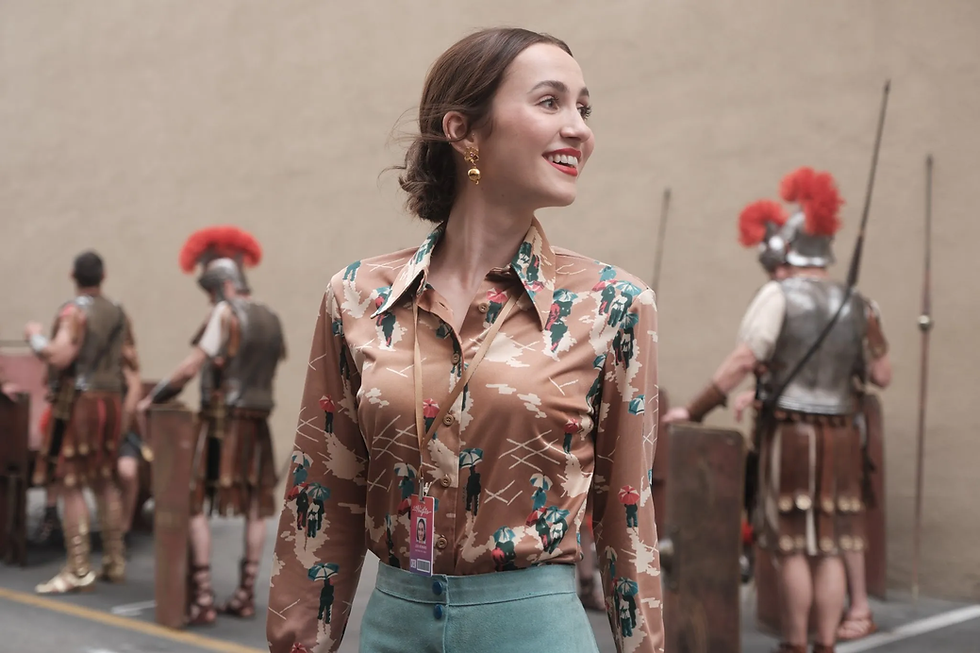
Lexi, for her part, gets little to do as a Hollywood production assistant, and to have the news of no renewal hit my feed reinforced the shruggable nature of her outcome. To have Nate meet his end (because he was buried alive and poisoned via snake bite – clearly I’m still not over this) and not have Rue or Jules even acknowledge it after all of the season one drama is a missed opportunity. Maddy and Cassie, two characters with extensive Nate Jacobs relationship history, are barely even affected. Their reaction to his body isn’t even the final stinger of Episode 7 and then after one scene in the finale, it’s been processed.
Visually, however, Euphoria hasn’t missed a beat. From the carnival antics and grandiose house parties of the first season and beyond, the show’s always been heavily stylized and gorgeous to look at, and season three – shot entirely on custom-designed Kodak film stock – remains lucious, grainy eye candy even when the writing falters. Marcell Rév’s Emmy-winning cinematography is arguably just as vital to the show’s core voice as its music or ensemble. Given the change in location and tone, this season admittedly sacrifices some of its predecessor’s vibrance, but replaces it with dustier, desaturated photography that’s still more aesthetically pleasing than 90 percent of what’s on TV.
Flawed doesn’t even begin to describe this season, but I’d be remiss not to admit how much Euphoria Sundays added to my life, even this year. The Chloe Cherry security footage lip reveal to cap off Episode 4? Alamo nearly smashing Rue’s head in with a polo mallet while she’s buried up to her neck just a week later? This team was churning out gag-worthy moments like rent was due right up until the end.
In rewatching season one with some friends last year, it confirmed for me that Euphoria was never “high art,” despite the chokehold it might’ve had on me as a high school freshman watching real television for the first time. Its distinct style is founded in flashy editing tricks, provocative sexual references, and ironic narration from a Disney Channel star. Thus, even a season like this one can’t desecrate the overall package too much. It’s no Game of Thrones. At its worst, it’s a ludicrous realignment of priorities.
I have a complicated, love-hate relationship with this show and that dichotomy has only been further muddied with these final eight hours. I thank Euphoria immensely for adding more to my generation’s shared cultural bounty, and while each season was ultimately a marked downgrade from the last, certain aspects (Zendaya’s bold portrayal of Rue, the stunning visual sensibilities, the general sense of visceral dramatic chaos) remained strong throughout. Season three worked for me in spades even when it didn’t work narratively, and in a realm where shows that stick the landing are a hot commodity, it’s perhaps the most gripping addition to that lesser batch.
All episodes of ‘Euphoria’ are now streaming on HBO Max.
-Ethan


Comments